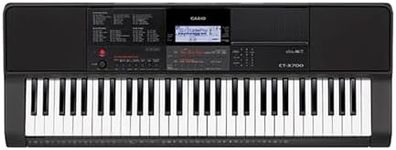
Buying Guide for the Best Casio Keyboards
Choosing the right Casio keyboard can be a rewarding experience if you know what to look for. Whether you're a beginner, an intermediate player, or a professional, there are certain key specifications that will help you find the best fit for your needs. Understanding these specs will ensure that you get the most out of your keyboard and enjoy playing it for years to come.Number of KeysThe number of keys on a keyboard is crucial as it determines the range of notes you can play. Keyboards typically come with 61, 76, or 88 keys. A 61-key keyboard is suitable for beginners and those with limited space. A 76-key keyboard offers a wider range and is good for intermediate players. An 88-key keyboard is full-sized, like a traditional piano, and is ideal for advanced players or those who want the full range of notes. Consider your skill level and the type of music you want to play when choosing the number of keys.
Touch SensitivityTouch sensitivity refers to how the keyboard responds to the force with which you press the keys. This feature is important because it allows for more expressive playing. Keyboards can have no touch sensitivity, single touch sensitivity, or graded touch sensitivity. No touch sensitivity means the volume is the same no matter how hard you press. Single touch sensitivity means the volume changes with the force of your press. Graded touch sensitivity mimics an acoustic piano, with heavier touch in the lower keys and lighter touch in the higher keys. Beginners might start with no or single touch sensitivity, while more advanced players will benefit from graded touch sensitivity.
PolyphonyPolyphony is the number of notes a keyboard can produce at the same time. This is important for playing complex pieces of music where multiple notes and chords are played simultaneously. Keyboards typically offer 32, 48, 64, 128, or even 256-note polyphony. For beginners, 32 or 48-note polyphony is usually sufficient. Intermediate players might prefer 64-note polyphony, while advanced players and those who use a lot of layering and sustain will benefit from 128-note polyphony or higher.
Built-in Tones and RhythmsBuilt-in tones and rhythms add variety to your playing experience by providing different sounds and accompaniment styles. Keyboards can have a few dozen to several hundred built-in tones and rhythms. Beginners might not need a vast array of options, so a keyboard with fewer tones and rhythms will suffice. Intermediate and advanced players, or those who enjoy experimenting with different sounds, will benefit from a keyboard with a larger selection of built-in tones and rhythms.
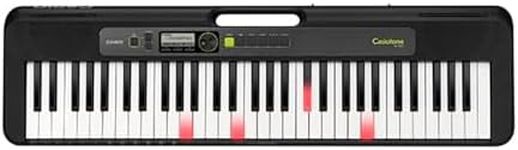
Learning FeaturesLearning features are designed to help beginners and intermediate players improve their skills. These can include built-in lessons, light-up keys, and connectivity to learning apps. Keyboards with these features can guide you through songs, show you which keys to press, and provide feedback on your playing. If you're a beginner or someone looking to improve your skills, choosing a keyboard with robust learning features can be very beneficial.
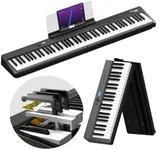
PortabilityPortability is an important factor if you plan to move your keyboard frequently or have limited space. Lightweight and compact keyboards are easier to transport and store. If you need a keyboard for home use and don't plan to move it often, portability might be less of a concern. However, if you need to take your keyboard to lessons, gigs, or practice sessions, a more portable model will be advantageous.
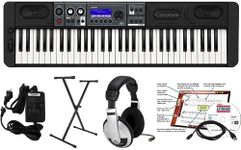
Connectivity OptionsConnectivity options allow you to connect your keyboard to other devices, such as computers, tablets, and external speakers. Common connectivity options include USB, MIDI, and audio outputs. USB and MIDI connections are useful for recording and using music software, while audio outputs are important for connecting to external speakers or amplifiers. Consider how you plan to use your keyboard and what devices you want to connect it to when evaluating connectivity options.